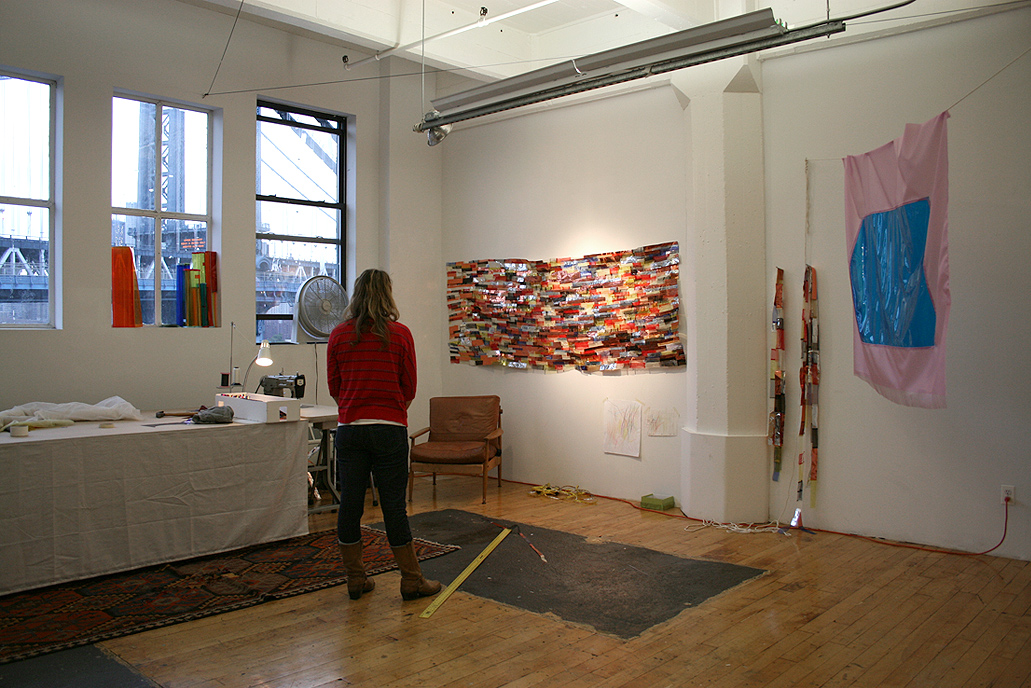
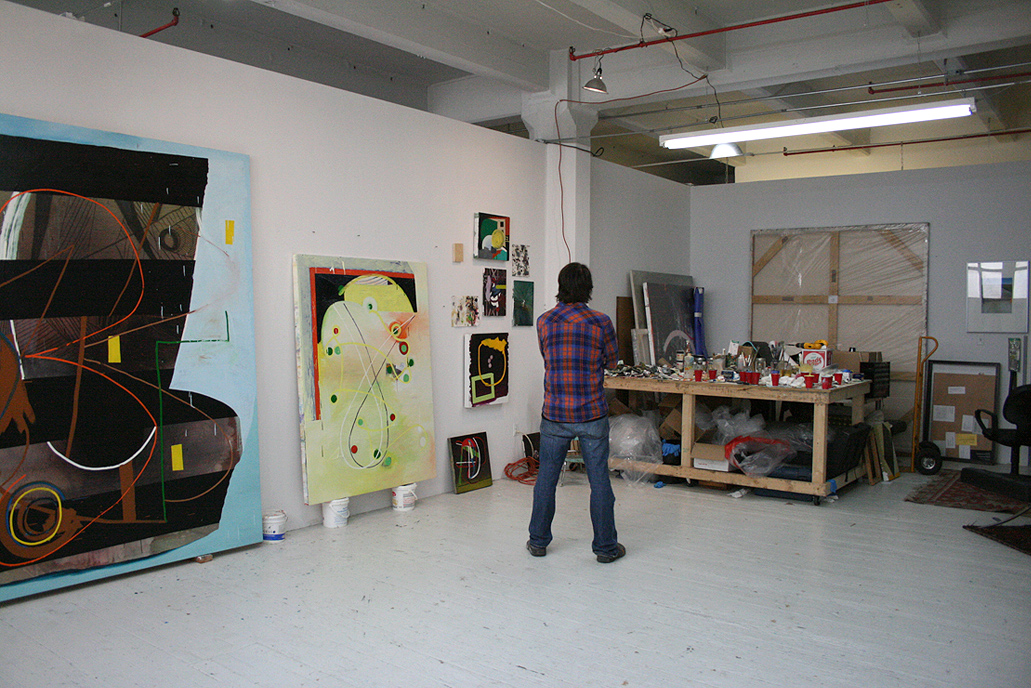
images will be posted soon, until then here is a picture of the model I made of the gallery.

Here are images of the show!


Rachel Hayes & Jiha MoonOpening Saturday September 17th, 7-9pmADA gallery228 West Broad Street Richmond, Va. 23220

< Homage to Morandi: Essence of Art > Participating Artists : Anne Harild, Boyun Jang , Bryan Osburn, Changkyum Kim , Changsun Koh, Chunhee Im, Eric Sall, Eunsun Park, Frank Webster, Jahyuk Yim, Joseph Burwell, Manna Lee , Sky Kim, Tom Lee 2011.6.2-6.26 < Homage to Morandi: Essence of Art > Sook-jeen Oh (Director of Brain Factory) The Ideal of this exhibition came from the lingering thoughts of flower paintings presented at a retrospective of Giorgio Morandi (1890~1964, Italian) who has been considered as a master of 20th century still-life painter, at the New York Metropolitan Museum of Art back in 2008. For this exhibition, fourteen local and international artists have individually interpreted ‘the Essence of Art' as a common theme revolving around Morandi's works and life. The beauty of a retrospective comes by encountering the strong aura of existence from the artist's entire life through his artifacts in a confined space. The retrospective of Giorgio Morandi at Metropolitan Art Museum was certainly one of the most memorable exhibitions because of two distinctive reasons. First, the letters he sent to his friends were displayed in frames side by side with his art works, and they prove the artist's private life and his spirit completely stayed in his art. Morandi transformed the daily life from ordinary to metaphysical level through subtle and delicate composition of objects as well as simple but sophisticated arrangement of palette on small canvas. While walking through the aisle where his works were displayed, I started to realize the reason why Morandi could be able to persist with his subject matter. What he was focused on was not the subject matter that was on the canvas, rather it was far more beyond the canvas. Therefore he doesn't seem to need making the visual variation. As a result, what we see from his art, at first, look all the same, but the subtleness of his works vibrates as the time passed by. I thought what he picked as the subject matter; the complexion of what he was searching through making the paintings. What I got was strong impression of his life which completely dedicated to his art as a specimen of all the artists who are searching as he was. This makes the phenomenon of synchronizing the art and the artist himself is something that we all have to think about. The second reason comes from many of Morandi's flower paintings titled ‘Fiori' (all the flower paintings titled the same.) Since they are mostly owned by private collectors- most of them remain anonymous while lending their paintings to the MET- it was very rare to see them in one place. The fact that those flower paintings were only created to give out as presents, according to the descriptions and letters he wrote, the eccentric feeling from the beauty of ‘Fiori' lingered long in my memory. The reasons listed above led me to propose ‘flowers' as the main visual theme of the exhibition. The flowers in Morandi's paintings are artificial flowers that are still preserved and displayed at Morandi Art Museum in Bologna, along with other objects that he used in his still life paintings. Therefore, his flowers in the paintings are also the one of his still life objects that he used for the paintings. This satisfies the hypothesis that the visual theme is flowers and not necessarily flowers at the same time, and it enables to nullify the symbolism of giving and receiving an object or an image of flowers. Then why are Morandi's flowers in the paintings more subtle and elegant than the real flowers? Do the images that are perceived by our eyes reflect the afterimage of our experience? Or, do we implicitly distinguish them as the flowers that would never wilt? Morandi, who once said “ There is nothing more surreal and abstract than reality itself ,” might have thought so. Maybe he wanted to accomplish something that transcends human cognition through our visual system by painting the same subject over and over. This would be the reason why his works, whose essence remains without flesh, are still loved by and inspire many artists all over the world. I'd like to share the experience of a precious opportunity to appreciate Morandi's art world, that deletes the concept of time and imbues the air of contemplation in our spirits, as well as to ponder on the “essence or art”. | ||||||||||||||


 |
| This is Happening - Fabric and Mirrors |
 |
| Clinging To Fate - Fabric and Rocks |
 |
| Free Energy 2 |
 |
| Clinging to Fate - detail of shadows on wall behind piece |
 |
| Free Energy 1 - Steel and Light Gels |
 |
| Free Energy 1 |
 |
| Free Energy 2 - Steel and Fabric |
 |
| This is Happening and Free Energy 2 |